
Should You Change Anything Before the Fed Meeting?
For most people, probably nothing dramatic.
A single Fed meeting should not cause you to completely redesign your finances.
But it can be a useful trigger for a quick review.
Start with your debt.
Look at any credit cards, home-equity lines, or other variable-rate balances.
Know what rate you are paying.
If you are carrying high-interest debt, consider whether paying it down faster makes sense before taking on additional investing or discretionary spending.
Then look at your savings.
Check the APY on your savings account.
If you have built a financial buffer but it is sitting in an account paying almost nothing, compare alternatives.
You can also use a broader review like our 30-minute personal expense audit to look for spending or recurring expenses that could free up additional cash.
The goal is not to predict the Fed perfectly.
It is to make your finances a little less vulnerable to whichever direction rates go next.
Do Not Make a Big Financial Decision Based on an 85% Probability
An 85% market probability sounds extremely convincing.
It is not a decision.
Markets can be wrong.
Economic data can be interpreted differently.
Fed officials may weigh risks differently than traders expect.
And conditions can change quickly.
As recently as September 9, a Reuters survey found that a majority of economists still expected the Fed to hold rates steady through the September meeting, although a growing number saw a hike becoming possible.
Two days later, markets were pricing the probability of a quarter-point increase at roughly 85% following the inflation report.
That shift itself tells us something important.
Interest-rate expectations can change very quickly.
Treat forecasts as information—not certainty.
What Should You Watch on September 16?
The headline decision will obviously matter.
Did the Fed raise rates?
Did it hold?
If it raises, by how much?
But the statement and press conference may matter just as much.
Investors will want to know whether policymakers see the move as a one-time adjustment or the beginning of additional tightening.
They will watch what the Fed says about inflation.
They will look for changes in its economic projections.
And because the September meeting includes a new Summary of Economic Projections, markets will also receive updated views from policymakers about inflation, economic growth, unemployment, and the future path of interest rates.
One quarter-point hike matters.
Expectations about what comes next may matter even more.
If the Fed Raises Rates, What Happens Next?
Do not expect every financial product to change at the same time.
Some variable borrowing rates may adjust relatively quickly.
Banks may change savings yields on different schedules.
Bond markets will continue moving based on new inflation and economic data.
Mortgage rates may rise, fall, or barely react depending on what investors expected before the meeting and what the Fed says about the future.
That is why focusing only on the announcement can be misleading.
The financial system has already been adjusting to the possibility of a rate increase.
The September decision will settle one question.
It will immediately create another:
What does the Fed do next?
The Bottom Line
A Fed rate hike next week is no longer a remote possibility.
The latest inflation report strengthened expectations that the Federal Reserve could raise its benchmark rate by a quarter percentage point at its September 15–16 meeting.
But the decision has not happened yet.
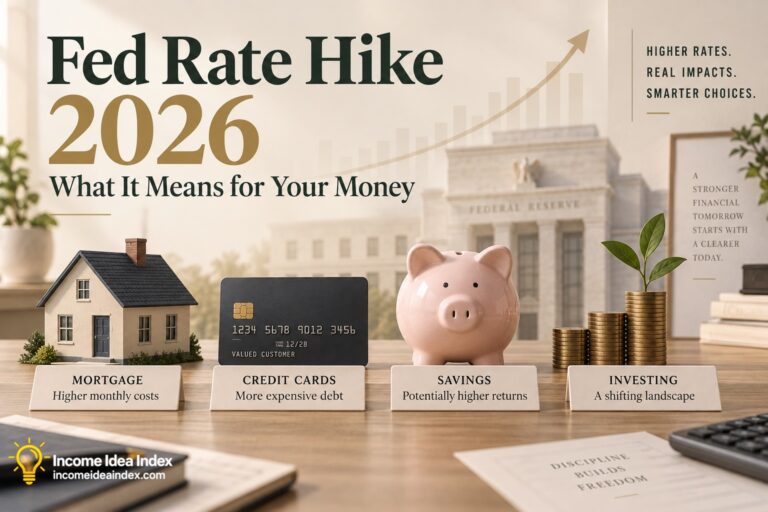
For households, the potential consequences are fairly straightforward.
Variable-rate debt could become more expensive.
New loans may become harder to justify.
Mortgage rates will continue responding to broader bond-market and inflation conditions rather than mechanically following the Fed.
And savers may have more opportunities to earn competitive yields on cash.
You do not need to rebuild your finances because traders think a rate hike is likely.
You do need to understand where higher rates would affect your money.
Know which debts are variable.
Know what your savings are earning.
Avoid unnecessary expensive borrowing.
And make financial decisions that still work whether the Fed raises rates next week or surprises the market by holding steady.
The Fed controls an important interest rate.
You still control what you do with yours.