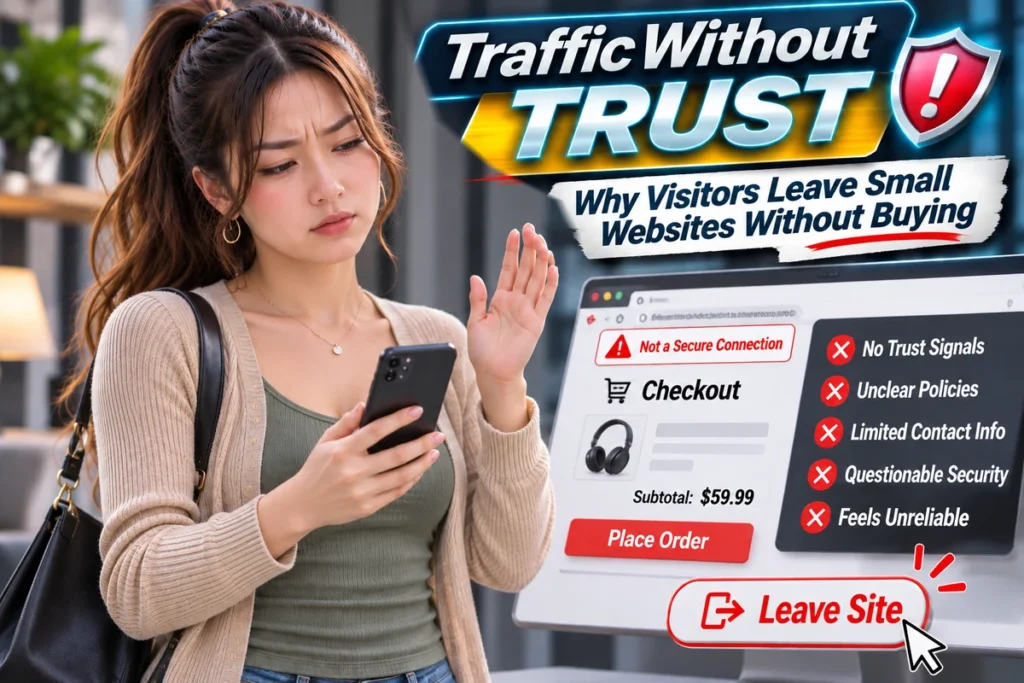
Security is an ongoing operational responsibility. Keep website software updated, use appropriate account protection, and rely on reputable payment integrations that follow their own security requirements. A marketing article cannot substitute for a technical security audit, but it can state a useful rule: promise only security measures your business actually uses.
If customers report failed charges, unclear payment redirects, or missing receipts, investigate those issues before buying more traffic. Each new campaign can amplify an existing failure if the transaction process is broken.
Find the real drop-off point before redesigning everything
“People are not buying” is not a sufficiently precise diagnosis. Divide the buying process into a few measurable stages: relevant page view, product-detail engagement, action-button click, cart or checkout start, successful payment, and successful delivery or confirmation.
You do not need invasive tracking to understand this basic funnel. Privacy-respecting analytics, payment records, and controlled test purchases can expose important failures. Avoid collecting sensitive personal information unnecessarily, and follow applicable privacy rules.
If visitors rarely engage with the product details, the offer or traffic match may be weak. If many click the purchase button but few begin checkout, the transition may be broken or unexpectedly complicated. If checkout starts but completion is low, investigate payment errors, surprise fees, account requirements, and form usability.
Use event data cautiously. A low conversion rate from a tiny number of visitors can be random variation. A few bot visits or one unqualified traffic source can distort percentages. Before drawing conclusions, confirm the data definitions, device breakdown, and whether the tracking actually works.
Most useful website improvements begin with a specific observed problem rather than an aesthetic preference.
Test one credible explanation at a time
Suppose customers start checkout but often abandon after seeing the total. You suspect surprise shipping charges. Move a shipping estimate earlier and measure whether the relevant completion rate changes. Or suppose a digital product receives clicks but few sales. Add a genuine sample preview that demonstrates exactly what buyers receive.
Avoid changing the entire layout, price, copy, checkout processor, and traffic strategy simultaneously. Even if sales improve, you will not know what mattered. A single focused change produces more useful learning. With low traffic, you may need longer observation periods and qualitative feedback rather than conventional large-sample A/B tests.
You can also ask real prospects to attempt common tasks while explaining what confuses them. Watch whether they understand the offer, find the policy, locate the price, and navigate checkout. Do not coach them through the page or defend the design as they use it. The point is to discover how the experience behaves without its creator standing beside it.
Keep a record of what changed and why. A practical improvement log includes the suspected problem, evidence, intervention, date, and observed outcome. Over time, it becomes a more valuable asset than repeated guesswork.
A small website’s trust audit
Consider a hypothetical independent shop selling a $29 digital workbook. It receives 1,000 relevant visits during a month, and ten purchases are completed. The 1% conversion rate is simply the example’s result, not an industry benchmark. The owner notices many visitors reading the page and clicking the sample preview, but most never attempt checkout.
The product page describes the workbook as “the ultimate solution” without showing its contents. It does not say which software opens the files, whether pages are editable, or what happens after payment. The owner adds an honest table of contents, sample pages, compatible formats, and a plain-language delivery explanation. More people then start checkout.
The next review finds checkout starts are healthy, but completed purchases remain low on mobile. The owner discovers that the payment form shifts unexpectedly and the required field errors are unclear. Fixing that specific problem may have more value than publishing another month of promotional content.
The example is not a promise that these changes will increase sales. It demonstrates a method: locate uncertainty, find evidence, make a targeted correction, and measure the next step rather than treating every problem as insufficient traffic.
Trust does not mean removing all friction
There is a difference between needless barriers and useful consideration. A business selling expensive equipment, coaching, or customized services may need prospects to understand suitability before purchasing. A transparent discovery call or qualification form can prevent disappointed buyers and costly refunds.
The goal is not maximum immediate conversion at any cost. Aggressive countdown timers, misleading stock messages, hidden subscriptions, or fabricated endorsements might produce some short-term action while damaging long-term trust and inviting complaints.
Ask which outcome actually matters: qualified sales, repeat purchases, fewer support issues, better customer fit, or durable reputation. A website that converts fewer visitors into happier, properly informed customers may be healthier than one that pushes unqualified buyers through a misleading process.
The distinction is especially important for creators and affiliate marketers. Recommending unsuitable products can erode audience credibility even when an individual recommendation generates a commission. Trust is an asset accumulated through accurate expectations and damaged when promises fail.
Traffic only becomes opportunity when the offer makes sense
Small websites do not need to pretend to be giant brands. They need to answer ordinary questions clearly, make claims they can support, and deliver what they promise. Honest reviews, useful product demonstrations, transparent pricing, accessible checkout, responsive support, and accurate policies all help a visitor evaluate the risk of buying from an unfamiliar seller.
Before investing in more promotion, follow a realistic customer from the page they land on to the final confirmation. Identify the first unanswered question or confusing step. Fix it. Confirm the improvement. Then continue to the next problem.
The most productive question is not always, “Where can we find more traffic?” Sometimes it is, “What are we asking the traffic we already have to believe without enough evidence?”
A visitor cannot become a customer until they can decide. Good trust signals make that decision easier—and more informed.
This article provides general marketing and business education. Security, accessibility, privacy, consumer-protection, and payment obligations depend on the jurisdiction and services involved.