

What TianGong Ultra Does Not Prove
It is worth being clear about the limitations of what this story proves.
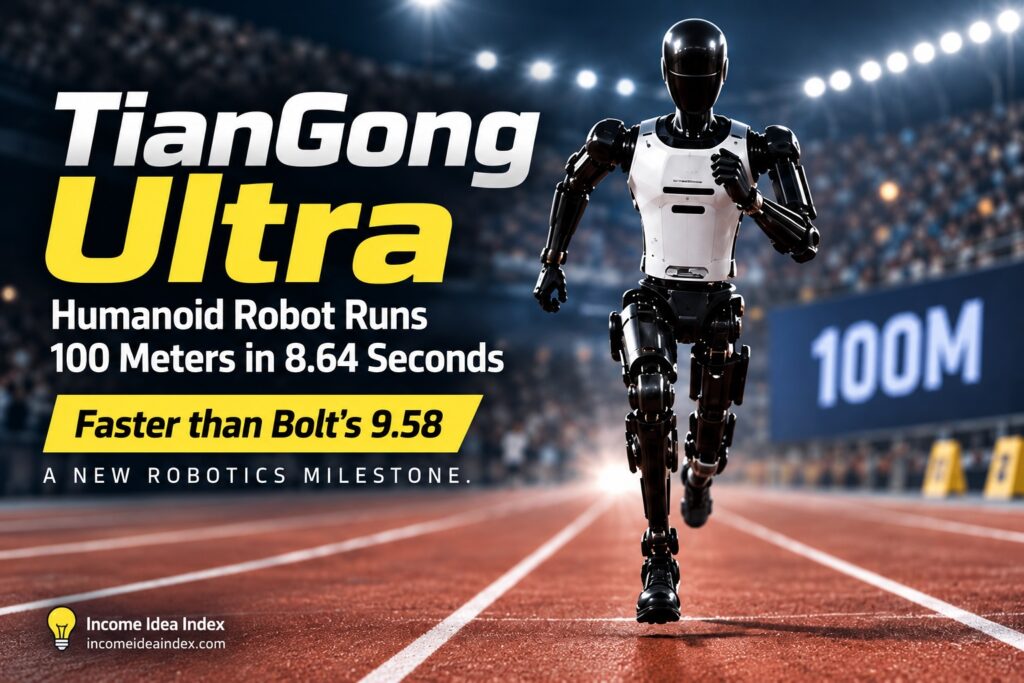
TianGong Ultra’s 8.64-second sprint does not prove that humanoid robots are ready to replace human workers broadly.
It does not prove that they are already cost-effective everywhere.
It does not prove they can safely handle every unpredictable environment.
And it does not prove that speed automatically equals useful intelligence.
A robot can be very good at one impressive task and still have major weaknesses elsewhere.
That is normal in emerging technologies.
The same caution applies to AI more broadly. A tool can produce something highly impressive in one setting and still require a lot of human judgment in another. That is one reason articles like AI Is Saving Us Time—So Why Do We Feel Busier? and 7 Practical Ways to Use AI to Save Time Every Week matter. New capability does not automatically equal useful deployment.
Still, limitations do not erase progress.
They simply help us interpret it more intelligently.
Could Humanoid Robots Reach Real Workplaces Soon?
In limited ways, yes.
According to X-Humanoid’s official material, that process is already beginning through guided demos and early application scenarios in guidance, sorting, inspection, and handling.
The more difficult question is how quickly humanoid robots will move from attention-grabbing pilots to widespread deployment.
That depends on several things:
- reliability
- safety
- cost
- maintenance
- battery life or operational endurance
- ease of integration
- software capability
- customer ROI
If companies can improve those areas quickly enough, the shift could happen faster than many people expect.
If not, humanoid robots may remain impressive but niche for longer.
The truth is probably somewhere in between.
We are likely entering a period where humanoid robots appear more often in controlled commercial, industrial, and public-facing roles first, before spreading more widely.
Why Readers Should Actually Care
This kind of story is not just for robotics fans.
It matters because it hints at where part of the AI economy may be heading next.
Most recent AI headlines have focused on software:
chatbots, image generators, AI search, agents, and workplace assistants.
Humanoid robots bring AI into the physical world.
That raises much bigger questions over time:
What happens when AI can not only analyze work, but physically do parts of it?
What jobs become easier?
Which tasks become more automated?
Which industries adopt first?
Where do humans remain decisively better?
How does this change productivity expectations?
Those are the kinds of questions that turn a viral headline into a real economic story.
And because humanoid robots are visually compelling and easy to understand, public attention to this category could grow quickly.
The Bottom Line
The TianGong Ultra humanoid robot running 100 meters in 8.64 seconds is a genuine milestone.
Yes, the comparison with Usain Bolt’s 9.58-second world record makes the story instantly clickable.
But the bigger point is not that a robot produced a wild sports headline.
The bigger point is that humanoid robots are becoming more capable in the physical world, and companies are increasingly trying to turn those capabilities into real products and real work.
X-Humanoid’s own materials make that clear.
The company is not only talking about races. It is talking about visitor guidance, industrial sorting, electrical inspection, autonomous handling, difficult-terrain mobility, and the growing importance of ROI.
That is what makes this more than a novelty.
A fast robot is interesting.
A useful humanoid robot industry would be far bigger.
And that is why TianGong Ultra’s sprint matters.