Welcome subscribers with the content they requested
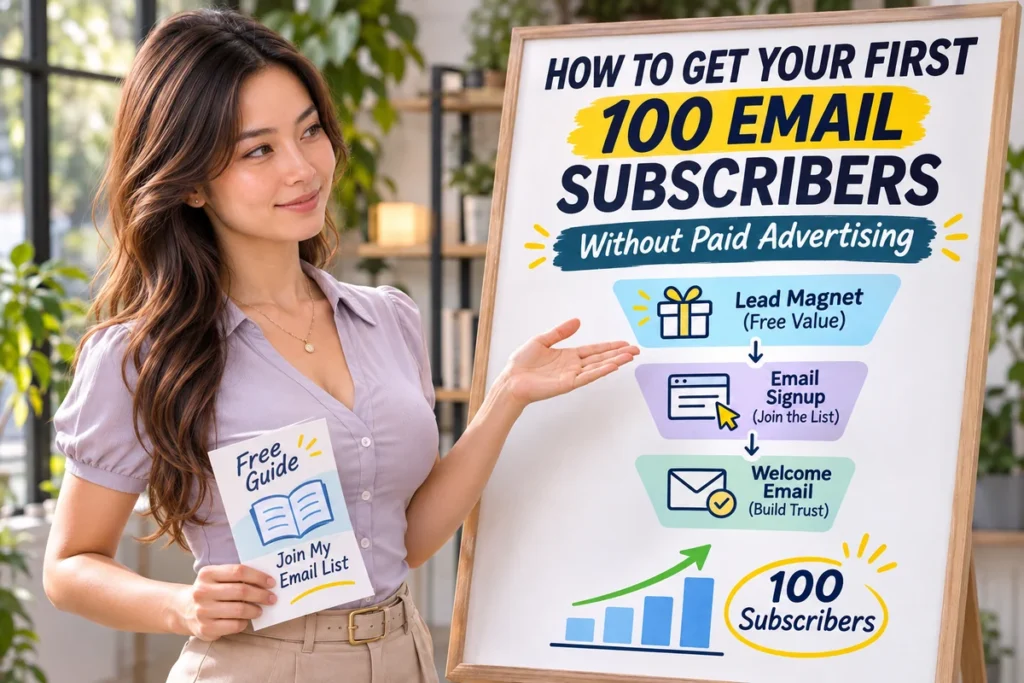
The welcome email is where you establish the relationship. Deliver the promised resource clearly, repeat what future emails will cover, state the approximate frequency, and provide an easy way to reply. A friendly but specific message is better than a lengthy sales pitch. If the resource is a download, link to a page that works without confusing login requirements.
Then plan the next few issues around the reader’s journey. A person who downloaded a client-proposal checklist may next need advice on project scope, pricing, or handling revisions. If the second email suddenly promotes an unrelated product, the reader may conclude that the signup promise was misleading. Educational emails can support future sales without making every message a sales announcement.
Reply to genuine questions when feasible. Early subscribers can reveal unclear instructions, missing topics, and objections you did not anticipate. Treat that feedback as qualitative insight, not statistically representative research. Never quote a person’s reply publicly without permission. Trust builds when subscribers see that the sender behaves like a reliable publisher rather than a collection machine.
Respect permission, privacy, and deliverability
Build a list of people who knowingly requested your communications. Do not buy addresses, scrape profiles, or add business-card contacts to a marketing list without considering consent and local rules. U.S. federal CAN-SPAM law generally focuses on requirements for commercial email, including truthful headers and subject lines, a valid mailing address, a clear way to opt out, and timely honoring of opt-outs. The FTC’s compliance guide explains those rules; additional laws may apply depending on where you and your subscribers are located.
For Gmail delivery, Google requires senders to follow its published authentication and sending guidelines; senders at very high volumes face additional obligations. If your service offers domain-authentication instructions, follow them before running substantial campaigns. Keep the sender name recognizable, avoid deceptive subject lines, and do not buy a misleading sending domain. These habits are worthwhile even with a very small list.
Explain why you collect email addresses and link to a real privacy policy. Remove contacts who unsubscribe and honor requests about their information under applicable law. Respecting reader preferences is part of list quality, not merely a legal checkbox. An unsubscribed person should not be quietly re-added during the next import.
A six-week plan for your first 100 email subscribers
Week one: build the foundation. Define one audience, one promise, and the first three issue topics. Choose an email service and finish the subscribe page, privacy information, confirmation flow, and welcome email. Test with an address you control. Do not promote a form that has not been checked end to end.
Week two: publish a useful cornerstone piece. Answer a narrow problem in depth and link to a related resource or subscription. Share a genuinely helpful excerpt through the one social channel where your audience participates. Track where visitors come from, not just the total number.
Week three: build distribution through conversations. Contribute helpful answers in appropriate communities, contact one potential collaborator with a specific proposal, and ask existing readers what they want next. Avoid posting links where promotion is unwelcome.
Week four: improve the signup experience. Review page visits, form completions, confirmation drop-off, and welcome-email performance. If relevant visitors arrive but almost nobody subscribes, revisit the promise and placement. If nobody reaches the page, concentrate on useful content and distribution instead of changing button colors endlessly.
Week five: publish a second practical resource. Address a related question, show an example, and link readers toward the same clear subscription promise. Do not manufacture superficial variations of the first article simply to increase page count.
Week six: review, retain, and decide. Count subscribers, unsubscribes, meaningful replies, and the channel behind each signup. Continue the channel that produced interested readers. Stop or revise activities that created work without evidence of value. If you have not reached a hundred, the exercise still gives you a clearer acquisition process; there is no universal six-week guarantee.
Mistakes that make a list look bigger than it is
Offering an unrelated prize. The incentive attracts attention but not interest in the newsletter. Choose a resource that naturally belongs to your topic.
Promising a frequency you cannot maintain. A burst of daily emails followed by silence is confusing when readers were promised weekly guidance. Start with a schedule you can honor.
Using every channel at once. Ten platforms can consume your time without giving any one approach a fair test. Select channels based on audience fit and the work you can realistically sustain.
Ignoring the welcome experience. A subscriber who never receives the promised resource may lose trust immediately. Test deliverability, confirmation steps, and download links before traffic arrives.
Treating unsubscribe requests as failures. Some people will decide the content is not for them. Make leaving easy and use patterns to improve relevance. Retaining reluctant contacts does not make your newsletter healthier.
Frequently asked questions
Do I need a lead magnet to get the first 100 subscribers?
No. A useful ongoing newsletter with a clear promise can be enough, especially if people already appreciate your articles or tutorials. A closely related free resource can improve understanding of the offer, but it should not attract people who only want a prize.
Can I start an email list without a website?
Many email services provide hosted landing pages. You can begin with one of those while building a website later. You still need to explain the content, handle privacy and unsubscribe requirements, and give readers confidence that you are a real and accountable sender.
How quickly should I expect to reach 100?
There is no reliable universal timetable. It depends on audience fit, relevant traffic, distribution, perceived value, signup friction, and follow-through. Set weekly actions you control, measure the result, and adjust. A slower, engaged list is often a better foundation than an inflated number assembled through poor incentives.
The real milestone is a repeatable invitation
Your first 100 email subscribers are useful only if you can explain why they joined and what they expect next. Establish one credible promise, publish material that earns attention, make subscribing easy, and respect the relationship after signup. Then the process that builds the first hundred can also help you decide whether—and how—to grow beyond them.