Creating a digital product is only part of the process.
Once your ebook, template, planner, spreadsheet, workbook, course, or other digital product is ready, you still need somewhere customers can actually buy it.
If you are trying to figure out where to sell digital products online, the good news is that you have several options.
Some platforms are designed to make selling simple for beginners. Others give you more control over your brand, customer experience, and long-term business.
If you’re still deciding what to create, you can also explore our guide to [11 digital products you can create once and sell repeatedly].
The best choice depends on what you are selling, how much control you want, whether you already have an audience, and how comfortable you are setting up your own store.
Here are six practical places to consider.
1. Etsy
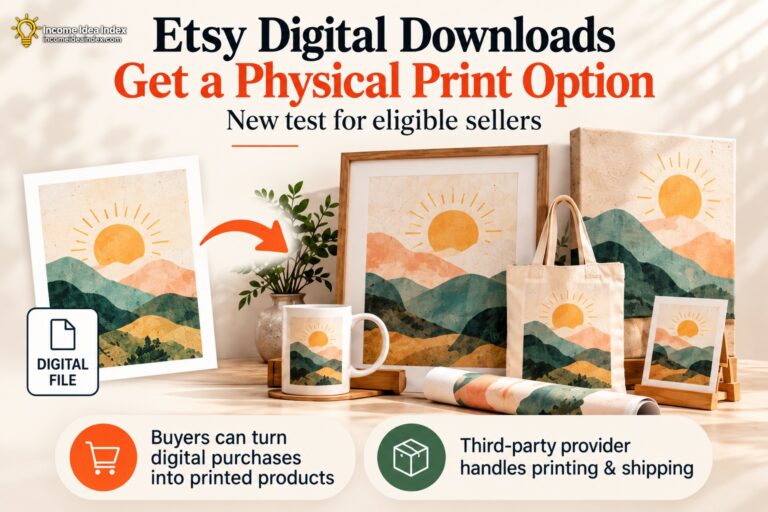
Etsy is widely known for handmade and physical products, but it also supports digital downloads.
That makes it a possible option for products such as:
- Printable planners
- Checklists
- Templates
- Worksheets
- Digital art
- Invitations
- Budgeting tools
- Business forms
- Educational printables
One of Etsy’s biggest advantages is that people already visit the marketplace looking for things to buy.
That means you are not necessarily starting with zero traffic.
However, marketplace traffic also comes with competition.
Your product title, preview images, description, keywords, pricing, and customer reviews can all affect whether buyers notice your listing.
Etsy may be a good fit if:
- Your product is visual
- People are already searching for similar products
- You want access to an existing marketplace
- You do not want to build a full website first
Keep in mind
Etsy charges seller fees, including listing and transaction fees, and payment-related costs may also apply depending on your location and setup.
Always check the current fee structure before pricing your products.
2. Gumroad
Gumroad is built around selling digital products directly to customers.
Creators can use it for products such as:
- Ebooks
- Guides
- Courses
- Templates
- Memberships
- Audio
- Tutorials
- Software
- Downloadable resources
The setup is relatively straightforward, which can make it appealing to beginners who want to start selling without building an entire ecommerce website.
You can create a product page, upload the digital product, set a price, and share the link with your audience.
Gumroad may be a good fit if:
- You want a simple setup
- You already have traffic from social media or a website
- You sell downloadable products
- You do not want a monthly ecommerce platform subscription
Keep in mind
Gumroad generally takes fees from each sale, and sales that come through its discovery marketplace can have a different fee structure than direct sales.
That means it is worth checking the current pricing before deciding whether it fits your product price.
3. Payhip
Payhip is another platform focused heavily on digital products.
You can use it to sell things such as:
- Ebooks
- Templates
- Courses
- Downloads
- Memberships
- Digital assets
One reason beginners may find Payhip interesting is that it offers a free starting plan.
Instead of requiring you to immediately pay for a monthly subscription, you can begin selling and pay a transaction fee when a sale occurs.
That can reduce the upfront cost of testing your first product.
Payhip may be a good fit if:
- You are just starting
- You want to avoid a monthly cost at first
- You want a simple digital storefront
- You want several digital-product features in one place
Keep in mind
Free plans usually involve higher per-sale fees than paid plans.
As sales increase, it can make sense to compare whether upgrading to a paid plan would reduce your overall costs.
4. Shopify
Shopify is a more complete ecommerce platform.
Instead of simply giving you a product page, it allows you to build a full online store around your brand.
You can sell:
- Ebooks
- Templates
- Courses
- Music
- Digital art
- Printables
- Videos
- Downloadable files
- Physical and digital products together
Shopify also supports digital delivery through its digital-product tools and apps.
This can make it a strong option for someone who wants to build a larger store over time.
Shopify may be a good fit if:
- You want a professional standalone store
- You plan to sell multiple products
- You may eventually sell physical products too
- Branding and customization matter to you
- You want more control over the customer experience
Keep in mind
Shopify generally involves a recurring subscription cost.
For someone testing one inexpensive digital product, that may be more than they need at first.
For someone building a larger ecommerce business, the additional control may be worth it.
5. Your Own WordPress Website
If you already have a WordPress website, selling digital products directly from your own site can be an attractive long-term option.
You can add ecommerce functionality through tools designed to handle payments and digital downloads.
This approach allows you to keep your articles, brand, email list, products, and customer journey in one place.
Selling from your own website can give you:
- More control over branding
- More control over product pages
- Direct traffic from your content
- Better opportunities for internal linking
- More flexibility in how products are presented
- The ability to build your own audience over time
This can be especially valuable if you are already publishing articles that attract the same people who might buy your products.
For example, someone reading an article about budgeting could naturally be introduced to a budgeting spreadsheet or planner.
Your own website may be a good fit if:
- You already have a website
- You are building a long-term brand
- You want content and products connected
- You want more control over your business
Keep in mind
Running your own store means you are responsible for more of the setup.
That may include:
- Ecommerce plugins
- Payment processing
- Product delivery
- Security
- Backups
- Site maintenance
- Taxes and compliance
You gain more control, but you also take on more responsibility.
6. Sell Through More Than One Platform
You do not necessarily have to choose only one place.