
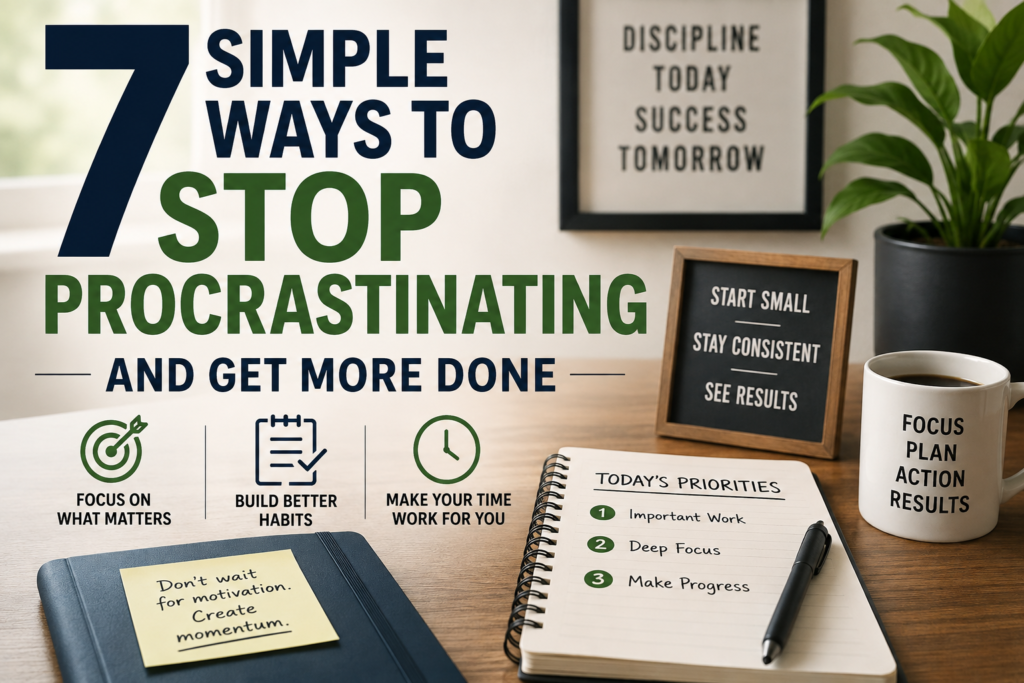
Finding practical ways to stop procrastinating can make even simple tasks feel easier to manage.
You know something needs to get done, but instead of starting, you check your phone, answer an unnecessary email, watch another video, or convince yourself you’ll do it later.
The solution isn’t always more motivation. Often, it’s about making it easier to start and creating a system that keeps you moving.
Here are seven practical ways to reduce procrastination and get more meaningful work done.
1. Make the First Step Smaller
Large tasks can feel overwhelming because your brain sees the entire project instead of the first action.
Instead of telling yourself:
“Finish the presentation.”
Make the first step:
“Open the presentation and create the title slide.”
Instead of:
“Clean the house.”
Try:
“Clean the kitchen counter.”
A small first step reduces resistance. Once you’ve started, continuing often becomes much easier.
2. Decide What Matters Before You Start
A long to-do list can create the illusion of productivity while making it difficult to decide what deserves your attention.
Before starting your day, identify the one or two tasks that would make the biggest difference if completed.
Ask yourself:
If I only accomplish one important thing today, what should it be?
You can still handle smaller tasks afterward, but your most valuable work gets priority.
3. Use a Short Focus Session
You don’t need to promise yourself that you’ll work for three uninterrupted hours.
Start with a manageable block of focused time.
Try working for 20 to 30 minutes with distractions removed. When the session ends, take a short break and decide whether to continue.
A defined time limit makes starting feel less intimidating because you’re not committing your entire day to the task.
4. Remove Distractions Before They Become a Problem
Willpower becomes much less important when distractions aren’t immediately available.
Before beginning focused work:
- Silence unnecessary notifications
- Close unrelated browser tabs
- Put your phone somewhere out of reach
- Clear unnecessary items from your workspace
- Let people around you know when you need uninterrupted time
The goal isn’t to eliminate every possible distraction. It’s to make distraction slightly less convenient than continuing your work.
5. Stop Waiting to Feel Motivated
Motivation is useful, but it isn’t reliable.
Some days you’ll feel ready to work. Other days you won’t.
If you only take action when you feel motivated, your progress depends on your mood.
Instead, create simple routines that tell you when it’s time to begin.
That might mean working on an important project immediately after your morning coffee, writing for 30 minutes after lunch, or reviewing tomorrow’s priorities before finishing your workday.
Consistent routines reduce the number of decisions you have to make.
6. Give Yourself a Clear Finish Line
Some tasks expand because there’s no clear definition of “done.”
Before starting, decide what completion actually means.
For example:
Instead of “work on my website,” define the task as:
“Write and publish the About page.”
Instead of “organize my finances,” use:
“Review this month’s transactions and categorize them.”
Specific finish lines make progress easier to see and give you a natural point to stop.
7. Track Progress Instead of Perfection
Perfectionism can become another form of procrastination.
You may delay starting because you’re worried the result won’t be good enough, or keep adjusting something that was already acceptable.
Focus on completing useful work first. You can improve it afterward when necessary.
At the end of the day or week, look at what you actually completed rather than everything you wish you had accomplished.
Visible progress builds momentum.
Put These Ways to Stop Procrastinating Into Practice
You don’t need to eliminate procrastination completely to become more productive.
You need a system that helps you start important work even when you don’t particularly feel like doing it.
Make the first step smaller. Decide what matters. Reduce distractions. Work for a defined period. Finish something.
Then repeat.
Small improvements in how you work can add up to significantly more progress over time.
If you also want to improve your finances, these simple money habits can help you build a stronger routine over time.