

How Creators Can Take Advantage of the Changes
You do not need to immediately start tagging every product that appears in your videos.
A better approach is to build monetization around content that already helps people make decisions.
Start With the Audience
Ask what your viewers actually need.
What do they regularly ask about?
What products naturally appear in your content?
What problems are they trying to solve?
A channel about freelancing might naturally recommend microphones, webcams, office equipment, software, or books.
A cooking channel might feature cookware and appliances.
A travel channel could recommend luggage and accessories.
The monetization should follow the content—not the other way around.
Create Content With Natural Buying Intent
Certain types of videos naturally lead toward purchase decisions.
Examples include:
- Product reviews
- Comparisons
- Tutorials
- Setup guides
- Best-products lists
- Product demonstrations
- Before-you-buy videos
- Alternatives
- Long-term reviews
- Beginner equipment guides
People watching these videos often already have a reason to consider buying.
That makes the affiliate recommendation part of the solution rather than an interruption.
Show the Product in Context
Video has an advantage over many traditional affiliate formats.
People can actually see what you are recommending.
Instead of simply saying a microphone is small, show its size next to something familiar.
Instead of claiming a piece of software is easy to use, demonstrate the workflow.
Instead of calling a product durable, explain how it held up after months of use.
The more useful the demonstration, the less the recommendation needs to feel like an advertisement.
Do Not Chase Every Bonus
Special affiliate campaigns may make some products financially attractive.
But commission size should not be the first filter.
Ask:
Would I recommend this without the bonus?
Does it actually fit my audience?
Can I explain why someone should or should not buy it?
Is there a better alternative?
A short-term bonus is not worth damaging long-term trust.
Build an Audience Instead of Just Chasing Views
YouTube’s new monetization tools become much more useful when viewers trust the person making the recommendation.
That means audience building still matters.
Income Idea Index’s 7 Practical Ways to Grow an Audience Without Spending a Fortune covers the fundamentals: solving specific problems, focusing on useful content categories, repurposing ideas, publishing consistently, and giving people a reason to return.
A loyal audience creates more options than a single viral video.
What This Means for Affiliate Marketing in 2026
YouTube’s announcement reinforces a trend that has been developing for several years.
Affiliate marketing is becoming increasingly integrated into creator platforms.
The old model often required someone to:
Create content.
Send the audience somewhere else.
Get them to click a separate affiliate link.
Hope attribution worked.
Platforms such as YouTube increasingly want those steps to happen inside their own ecosystems.
Content, discovery, recommendation, product selection, and purchase can become much more closely connected.
That creates opportunities for creators.
It also means affiliate marketers should think beyond websites and traditional search traffic.
A useful affiliate business in 2026 might include a website, YouTube channel, email list, social content, and other audience channels working together.
The affiliate link is only one piece of that system.
Does This Mean You Should Start a YouTube Channel?
Not necessarily.
YouTube is not automatically the right platform for every business or creator.
Video requires time.
It requires learning how to present ideas visually.
It may require filming, editing, thumbnails, titles, and consistent publishing.
And simply having access to affiliate tools does not guarantee anyone will watch the videos or purchase the products.
But if your subject benefits from demonstrations, comparisons, tutorials, reviews, or visual explanations, YouTube is becoming increasingly difficult to ignore as a commerce platform.
The platform is clearly investing in tools designed to connect three groups:
Creators. Brands. Buyers.
The easier YouTube makes those connections, the more opportunities creators may have to build income around useful content.
The Bottom Line
YouTube is making a significant push to expand creator commerce.
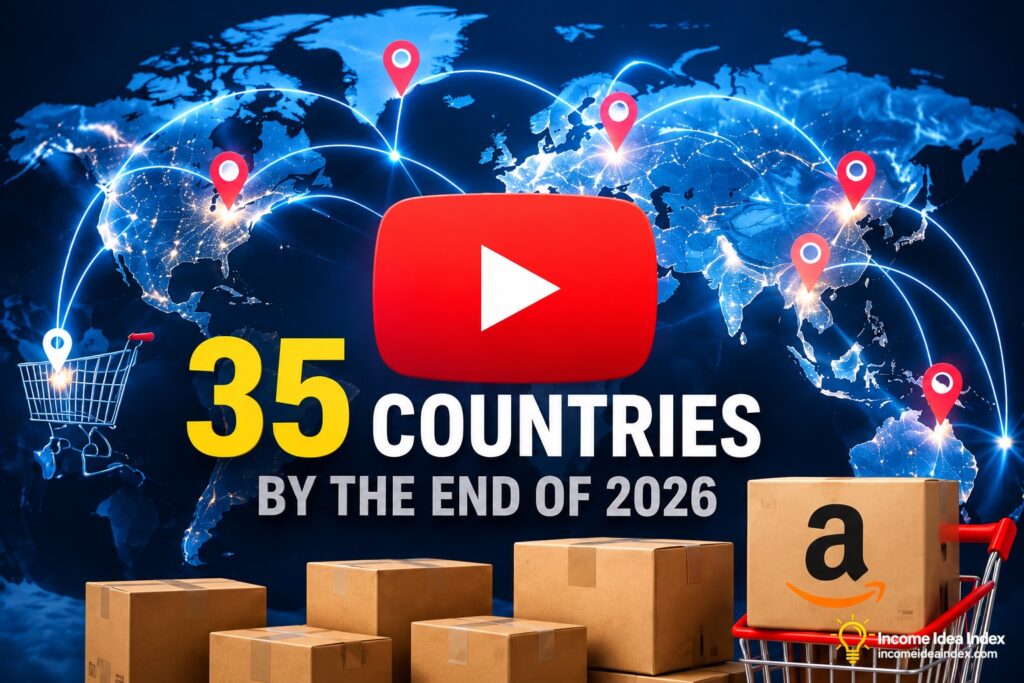
By the end of 2026, the YouTube Shopping affiliate program is expected to operate across 35 countries.
Amazon tagging is expanding internationally.
Product links are becoming localized for global audiences.
Brands will be able to offer special affiliate commissions and bonuses.
And YouTube Studio is gaining more tools for creators pursuing brand partnerships.
None of this makes creator income automatic.
Creators still need useful content, an interested audience, relevant products, and enough trust for people to act on their recommendations.
But YouTube is giving creators more ways to turn those ingredients into a business.
For someone already creating product-focused or recommendation-driven content, the opportunity is becoming considerably broader than earning money from advertisements alone.