Apple is positioning the iPhone less as a device containing a collection of separate apps and more as a personal computing hub where AI can help connect information across those apps.
That direction is significant.
But there is an important reason not to purchase an iPhone 18 Pro solely for Siri AI: the feature is launching in beta, and AI software can continue changing substantially after the hardware goes on sale.
The value of a $1,200 phone should therefore rest on more than a promise about what its AI may eventually become.
The same principle applies to AI technology generally. New capabilities can be useful without requiring us to hand over every decision. Our guide to AI agents for beginners looks more closely at where AI assistance can help and where human oversight still matters.
The Dynamic Island Is Smaller—but It Is Not Gone
Anyone hoping Apple would completely eliminate the Dynamic Island will have to keep waiting.
It is still there.
Apple has, however, redesigned it to occupy less display space while allowing more information to appear at once.
The new Dynamic Island can display as many as three Live Activities simultaneously.
That could make it easier to follow combinations of timers, navigation, rides, deliveries, sports scores, and other ongoing activities without constantly reopening their respective apps.
It is a useful refinement.
It is probably not a reason to spend $1,199.
And that distinction is important throughout the iPhone 18 Pro.
Some improvements make the phone better. Not every improvement makes an upgrade worthwhile.
The Displays Remain Familiar
Apple has kept the familiar Pro display sizes.
The iPhone 18 Pro uses a 6.3-inch Super Retina XDR OLED display, while the Pro Max uses a 6.9-inch display.
Both continue to support ProMotion adaptive refresh rates up to 120Hz, Always-On display functionality, HDR, and up to 3,000 nits of peak outdoor brightness.
That means someone upgrading from the iPhone 17 Pro generation should not expect a dramatic transformation in basic display size or everyday screen experience.
Again, the iPhone 18 Pro is largely about improving specific parts of an already mature device rather than redesigning everything.
The Price Increase Makes the Upgrade Question Harder
The iPhone 18 Pro starts at $1,199, while the Pro Max begins at $1,299.
Both start with 256GB of storage and can be configured with 512GB, 1TB, or 2TB.
Last year’s iPhone 17 Pro started at $1,099, while the iPhone 17 Pro Max began at $1,199.
That means both entry prices have increased by $100.
You can compare those numbers against Apple’s official iPhone 17 Pro specifications.
A $100 increase by itself will not determine the purchase for everyone, but it changes how the improvements should be evaluated.
The question should not be:
“Is the iPhone 18 Pro better than the iPhone 17 Pro?”
Of course it is better.
A more useful question is:
“Are the things that are better worth the amount I would actually have to spend to replace my current phone?”
That answer can be completely different.
Should iPhone 17 Pro Owners Upgrade?
For most iPhone 17 Pro and Pro Max owners, probably not.
The previous generation already includes the A19 Pro chip, three 48MP Fusion cameras, strong battery life, ProMotion displays, advanced video capabilities, and an Apple-designed vapor chamber.
The iPhone 18 Pro improves several important areas, but it does not suddenly make an iPhone 17 Pro obsolete.
The strongest reason for a 17 Pro owner to upgrade would probably be the new camera system—particularly for someone who expects to make serious use of variable aperture and expanded manual controls.
The Pro Max battery increase could also matter to extremely heavy users.
But if your iPhone 17 Pro still performs everything you need quickly, takes photos you are happy with, and comfortably lasts through your normal day, spending another $1,199 or more after only one year is difficult to justify.
What If You Have an Older iPhone?
This is where the iPhone 18 Pro becomes much more interesting.
Someone coming from an iPhone that is three, four, five, or more generations old is not comparing one year of improvement.
They are accumulating multiple generations of upgrades.
That can mean better cameras, brighter displays, faster performance, longer battery life, newer connectivity, improved durability, newer AI capabilities, and several years of refinements arriving all at once.
There is also another practical reason older-phone owners may eventually need to upgrade: batteries degrade, storage fills, hardware wears out, and older models eventually stop supporting newer software features.
That does not mean you should replace an older phone simply because Apple announced a new one.
Instead, ask whether your current device is beginning to create actual problems.
If the battery frequently dies before the end of your day, performance is becoming frustrating, storage is constantly full, the camera no longer meets your needs, or important features are unavailable, an upgrade becomes easier to justify.
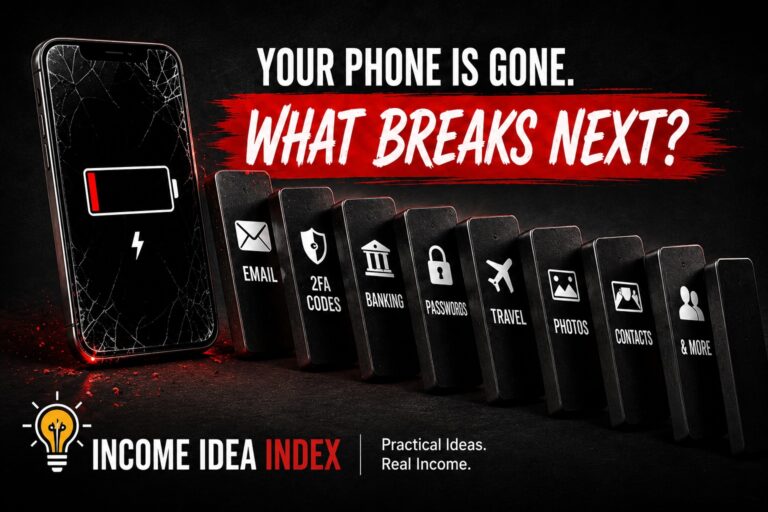
And because phones now hold access to so many important accounts and services, replacing one is also a good time to think about recovery and backup. Our digital emergency plan for losing access to your phone explains how to avoid making one device the only key to your email, passwords, authentication codes, photos, and other important information.
Should You Buy the iPhone 18 Pro or Pro Max?
The biggest difference for most buyers is straightforward: size and battery life.
The standard Pro is easier to handle and still provides the same A20 Pro processor and core camera system.
The Pro Max gives you the larger 6.9-inch display and Apple’s longest battery-life rating of the two.
If you regularly watch video, edit photos, work from your phone, use navigation for long periods, or simply prefer a larger display, the Pro Max may justify its additional $100.
If portability matters more, the 6.3-inch Pro is likely the more comfortable choice.
You should not automatically choose the Pro Max just because it is Apple’s most expensive conventional iPhone.
Buy the size you actually want to carry every day.
Is the iPhone 18 Pro Worth Upgrading To?
The iPhone 18 Pro and Pro Max are meaningful improvements, but they are not automatic upgrades for everyone.
The new variable-aperture camera is the standout change. Longer battery life, faster charging, the A20 Pro processor, Siri AI, Apple Reference Image, and the redesigned Dynamic Island make the phones more capable as well.
But capability and value are not the same thing.
For an iPhone 17 Pro owner, the improvements will probably not justify replacing a one-year-old phone unless photography, battery life, or another specific new capability matters enough to make a real difference.
For someone using a significantly older iPhone, the accumulated improvements can make the iPhone 18 Pro generation much more compelling.
The smartest approach is not to ask whether Apple’s newest iPhone is better.
It is.
Ask whether it solves a problem your current phone actually has.
If your existing phone remains fast, reliable, and capable of doing everything you need, keeping it another year can be the better technology decision—and the better financial one.
If your current phone is beginning to hold you back, the iPhone 18 Pro and Pro Max offer considerably more than a simple annual processor update.
Apple also introduced the new iPhone Duo alongside the Pro lineup. Because Apple’s first foldable iPhone represents a very different type of device—and a very different buying decision—it deserves its own separate look.