

Apple has officially introduced the iPhone 18 Pro and iPhone 18 Pro Max, bringing a new variable-aperture camera, the A20 Pro chip, longer battery life, faster charging, a smaller Dynamic Island, and deeper artificial intelligence features through iOS 27.
The new hardware sounds impressive. The price does too—but not necessarily in a good way.
The iPhone 18 Pro now starts at $1,199, while the iPhone 18 Pro Max starts at $1,299. That makes the real question less about whether Apple improved its flagship phones and more about whether those improvements are valuable enough to justify upgrading.
For someone coming from an older iPhone, the answer could easily be yes. For an iPhone 17 Pro owner, the decision is much less obvious.
Here is what actually changed, what matters in everyday use, and who should—and probably should not—consider upgrading.
iPhone 18 Pro and Pro Max at a Glance
| Feature | iPhone 18 Pro | iPhone 18 Pro Max |
|---|---|---|
| Starting price | $1,199 | $1,299 |
| Starting storage | 256GB | 256GB |
| Display | 6.3-inch OLED | 6.9-inch OLED |
| Processor | A20 Pro | A20 Pro |
| Main camera | 48MP variable aperture | 48MP variable aperture |
| Video playback | Up to 36 hours | Up to 45 hours |
| Wired fast charge | About 50% in 15 minutes | About 50% in 15 minutes |
| Colors | Black, silver, glacier, burgundy | Black, silver, glacier, burgundy |
Apple announced the two phones on September 9, 2026. Preorders begin September 12, with availability beginning September 18.
You can see the complete launch details in Apple’s official iPhone 18 Pro and Pro Max announcement.
The Biggest Change Is the New Variable-Aperture Camera
For many buyers, the most interesting iPhone 18 Pro upgrade is not the processor or AI.
It is the camera.
Both Pro models introduce a new 48-megapixel Fusion Main camera with variable aperture. Instead of being limited to one fixed aperture, the camera can operate at f/1.48, f/1.8, f/2.8, or f/4.0.
That matters because aperture affects both how much light reaches the camera sensor and how much of an image appears sharply in focus.
A wider aperture can allow more light into the camera, which can help with low-light photography and create a shallower depth of field. A narrower aperture can keep more of a scene in focus, which may be useful for group photos, landscapes, and other situations where you do not want the background becoming excessively blurred.
The phone can adjust the aperture automatically, but Apple is also giving users greater manual control.
New Pro camera controls allow photographers and creators to adjust settings such as aperture, shutter speed, and white balance and view a histogram for exposure.
That pushes the iPhone a little further toward the kind of creative control traditionally associated with dedicated cameras.
For professional photographers, content creators, social-media creators, and small-business owners who regularly produce photos or video from a phone, that could be a meaningful improvement.
For someone who mostly takes family photos, vacation pictures, and occasional social-media shots, the automatic improvements may matter more than the manual controls themselves.
Apple provides the complete camera configuration on its official iPhone 18 Pro technical specifications page.
Apple Reference Image Tries to Answer a Growing AI Problem
Apple also introduced a camera feature that may become increasingly important as AI-generated and AI-edited images become harder to identify.
It is called Apple Reference Image.
When Reference mode is used, the iPhone can capture signed sensor data and create an unalterable reference image representing what the camera actually saw.
The reference can later be compared with an edited version of the photograph.
Apple is also adding image metadata capabilities and plans to support Google’s SynthID standard in a future software update to help identify certain AI-generated or AI-edited images.
That will not magically solve the problem of fake images online, but it is an interesting attempt to create a stronger chain of authenticity between a camera and the image it captured.
This issue is becoming increasingly relevant as AI image tools improve. We have already looked at the other side of that technology in Why AI Image Generators Keep Getting It Wrong—and How to Fix It.
Apple Reference Image could be particularly useful for journalists, professional photographers, businesses, and others who sometimes need to establish that an image represents an authentic capture rather than a heavily manipulated or AI-generated creation.
Battery Life Gets Better—Especially on the Pro Max
Battery improvements are less exciting to advertise than a new camera, but they may have a bigger effect on everyday life.
Apple rates the iPhone 18 Pro for up to 36 hours of video playback and the iPhone 18 Pro Max for up to 45 hours.
For comparison, Apple rated the previous iPhone 17 Pro for up to 33 hours and the iPhone 17 Pro Max for up to 39 hours of video playback.
The Pro Max therefore receives the more substantial increase.
Those figures come from controlled testing and do not mean a phone will literally provide 36 or 45 hours of normal everyday use. Battery life varies significantly depending on screen brightness, cellular signal, apps, gaming, photography, video recording, navigation, and other activity.
But the comparison is still useful because Apple measures the generations using similar benchmarks.
The new phones also improve wired fast charging. Apple says compatible charging equipment can bring the battery to around 50 percent in approximately 15 minutes, compared with around 20 minutes for the previous Pro generation.
For people who work away from a desk, travel frequently, use navigation throughout the day, or rely heavily on their phones for work, better battery life and faster charging may be more valuable than a benchmark showing a faster processor.
And if keeping a phone powered throughout a workday is already a problem, upgrading the entire device is not always the first solution. Our guide to useful tech accessories for gig workers includes practical charging and mobile-power considerations that apply well beyond gig work.
The A20 Pro Chip Is Built for Performance and AI
Both new phones use Apple’s A20 Pro processor.
Apple says the chip is built using a 2-nanometer manufacturing process and includes a six-core CPU, seven-core GPU, and Dual 16-core Neural Engine.
According to Apple, the GPU can deliver up to 40 percent higher performance than the A19 Pro, while the chip provides 50 percent more memory bandwidth.
The processor is also designed to handle more on-device AI processing.
Those numbers sound dramatic, but their importance depends heavily on what you do with your phone.
Someone editing high-resolution video, playing graphically demanding games, using computational photography, or running increasingly sophisticated AI features may benefit from the additional performance.
Someone who primarily checks email, browses websites, sends messages, watches videos, uses social media, and takes casual photos may notice much less difference.
Modern flagship phones are already extremely fast at ordinary tasks.
That is an important point when considering any upgrade: a faster phone is not automatically a more useful phone if your existing device is already fast enough for everything you do.
Siri AI Becomes a Bigger Part of the iPhone
The iPhone 18 Pro generation also arrives with iOS 27 and Siri AI.
Siri AI is Apple’s new Apple Intelligence-powered version of Siri. Apple says it is designed to be more conversational while using personal context to help users find information and take actions.
For example, Siri AI can potentially draw information from messages, email, photos, and other personal context. It can also use onscreen awareness to understand information currently displayed on the phone.
Apple is positioning the iPhone less as a device containing a collection of separate apps and more as a personal computing hub where AI can help connect information across those apps.
That direction is significant.
But there is an important reason not to purchase an iPhone 18 Pro solely for Siri AI: the feature is launching in beta, and AI software can continue changing substantially after the hardware goes on sale.
The value of a $1,200 phone should therefore rest on more than a promise about what its AI may eventually become.
The same principle applies to AI technology generally. New capabilities can be useful without requiring us to hand over every decision. Our guide to AI agents for beginners looks more closely at where AI assistance can help and where human oversight still matters.
The Dynamic Island Is Smaller—but It Is Not Gone
Anyone hoping Apple would completely eliminate the Dynamic Island will have to keep waiting.
It is still there.
Apple has, however, redesigned it to occupy less display space while allowing more information to appear at once.
The new Dynamic Island can display as many as three Live Activities simultaneously.
That could make it easier to follow combinations of timers, navigation, rides, deliveries, sports scores, and other ongoing activities without constantly reopening their respective apps.
It is a useful refinement.
It is probably not a reason to spend $1,199.
And that distinction is important throughout the iPhone 18 Pro.
Some improvements make the phone better. Not every improvement makes an upgrade worthwhile.
The Displays Remain Familiar
Apple has kept the familiar Pro display sizes.
The iPhone 18 Pro uses a 6.3-inch Super Retina XDR OLED display, while the Pro Max uses a 6.9-inch display.
Both continue to support ProMotion adaptive refresh rates up to 120Hz, Always-On display functionality, HDR, and up to 3,000 nits of peak outdoor brightness.
That means someone upgrading from the iPhone 17 Pro generation should not expect a dramatic transformation in basic display size or everyday screen experience.
Again, the iPhone 18 Pro is largely about improving specific parts of an already mature device rather than redesigning everything.
The Price Increase Makes the Upgrade Question Harder
The iPhone 18 Pro starts at $1,199, while the Pro Max begins at $1,299.
Both start with 256GB of storage and can be configured with 512GB, 1TB, or 2TB.
Last year’s iPhone 17 Pro started at $1,099, while the iPhone 17 Pro Max began at $1,199.
That means both entry prices have increased by $100.
You can compare those numbers against Apple’s official iPhone 17 Pro specifications.
A $100 increase by itself will not determine the purchase for everyone, but it changes how the improvements should be evaluated.
The question should not be:
“Is the iPhone 18 Pro better than the iPhone 17 Pro?”
Of course it is better.
A more useful question is:
“Are the things that are better worth the amount I would actually have to spend to replace my current phone?”
That answer can be completely different.
Should iPhone 17 Pro Owners Upgrade?
For most iPhone 17 Pro and Pro Max owners, probably not.
The previous generation already includes the A19 Pro chip, three 48MP Fusion cameras, strong battery life, ProMotion displays, advanced video capabilities, and an Apple-designed vapor chamber.
The iPhone 18 Pro improves several important areas, but it does not suddenly make an iPhone 17 Pro obsolete.
The strongest reason for a 17 Pro owner to upgrade would probably be the new camera system—particularly for someone who expects to make serious use of variable aperture and expanded manual controls.
The Pro Max battery increase could also matter to extremely heavy users.
But if your iPhone 17 Pro still performs everything you need quickly, takes photos you are happy with, and comfortably lasts through your normal day, spending another $1,199 or more after only one year is difficult to justify.
What If You Have an Older iPhone?
This is where the iPhone 18 Pro becomes much more interesting.
Someone coming from an iPhone that is three, four, five, or more generations old is not comparing one year of improvement.
They are accumulating multiple generations of upgrades.
That can mean better cameras, brighter displays, faster performance, longer battery life, newer connectivity, improved durability, newer AI capabilities, and several years of refinements arriving all at once.
There is also another practical reason older-phone owners may eventually need to upgrade: batteries degrade, storage fills, hardware wears out, and older models eventually stop supporting newer software features.
That does not mean you should replace an older phone simply because Apple announced a new one.
Instead, ask whether your current device is beginning to create actual problems.
If the battery frequently dies before the end of your day, performance is becoming frustrating, storage is constantly full, the camera no longer meets your needs, or important features are unavailable, an upgrade becomes easier to justify.
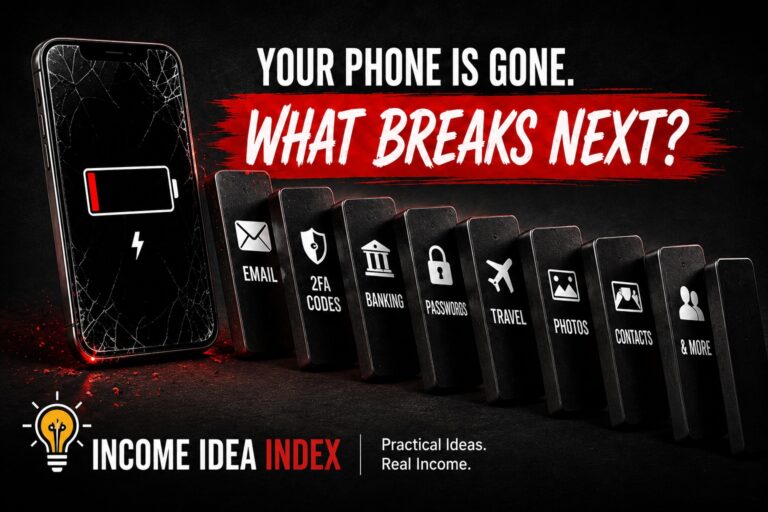
And because phones now hold access to so many important accounts and services, replacing one is also a good time to think about recovery and backup. Our digital emergency plan for losing access to your phone explains how to avoid making one device the only key to your email, passwords, authentication codes, photos, and other important information.
Should You Buy the iPhone 18 Pro or Pro Max?
The biggest difference for most buyers is straightforward: size and battery life.
The standard Pro is easier to handle and still provides the same A20 Pro processor and core camera system.
The Pro Max gives you the larger 6.9-inch display and Apple’s longest battery-life rating of the two.
If you regularly watch video, edit photos, work from your phone, use navigation for long periods, or simply prefer a larger display, the Pro Max may justify its additional $100.
If portability matters more, the 6.3-inch Pro is likely the more comfortable choice.
You should not automatically choose the Pro Max just because it is Apple’s most expensive conventional iPhone.
Buy the size you actually want to carry every day.
Is the iPhone 18 Pro Worth Upgrading To?
The iPhone 18 Pro and Pro Max are meaningful improvements, but they are not automatic upgrades for everyone.
The new variable-aperture camera is the standout change. Longer battery life, faster charging, the A20 Pro processor, Siri AI, Apple Reference Image, and the redesigned Dynamic Island make the phones more capable as well.
But capability and value are not the same thing.
For an iPhone 17 Pro owner, the improvements will probably not justify replacing a one-year-old phone unless photography, battery life, or another specific new capability matters enough to make a real difference.
For someone using a significantly older iPhone, the accumulated improvements can make the iPhone 18 Pro generation much more compelling.
The smartest approach is not to ask whether Apple’s newest iPhone is better.
It is.
Ask whether it solves a problem your current phone actually has.
If your existing phone remains fast, reliable, and capable of doing everything you need, keeping it another year can be the better technology decision—and the better financial one.
If your current phone is beginning to hold you back, the iPhone 18 Pro and Pro Max offer considerably more than a simple annual processor update.
Apple also introduced the new iPhone Duo alongside the Pro lineup. Because Apple’s first foldable iPhone represents a very different type of device—and a very different buying decision—it deserves its own separate look.